Explore our high-performance structural fastening assemblies certified for key infrastructure networks in Canberra and the surrounding capital region.
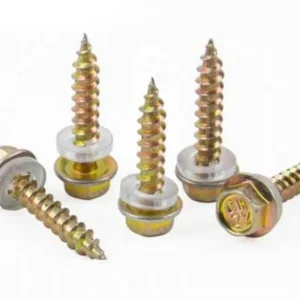
As the administrative heart of Australia, the Australian Capital Territory (ACT) commands strict adherence to safety, quality, and environmental metrics. The demand for structural fasteners—specifically heavy-duty flange bolts—is driven by large-scale civil works, defense logistics bases, regional transport networks, and commercial architectural structures. Projects such as the ongoing Canberra Light Rail Stage 2 expansion, defense installations at Majura and Campbell, and solar farm systems throughout the surrounding NSW tablelands demand fastening solutions that offer durability under high-stress conditions.
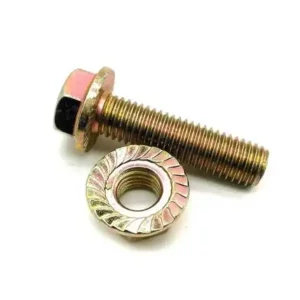
Information Gain: Flange bolts eliminate the need for independent washers by integrating a circular, flat washer-like surface beneath the hexagonal head. This structural design distributes clamping force over a broader surface area, preventing localized material indentation and mitigating the risk of thread loosening in high-vibration engineering frameworks.
In Canberra’s construction sector, environmental shifts—from sub-zero winter temperatures to hot summer conditions—place thermal contraction and expansion stresses on exposed steel structures. Engineers are shifting away from standard hex-bolt-and-washer configurations in favor of integrated flange bolts (specifically DIN 6921 standards) to streamline structural connections, reduce installation times, and minimize multi-component fatigue failures.
To operate effectively in the Australian structural market, suppliers must align their manufacturing protocols with international standards. In Australia, structural fasteners are regulated under the AS/NZS 1252 standard for structural assemblies. While AS/NZS 1252 dictates structural bolt parameters, flange bolts often follow the DIN 6921 (German Institute for Standardization) or EN 1665 specifications.
Understanding the mechanical properties of these standards is critical for choosing the right fastener for Canberra infrastructure projects:
We supply carbon steel flange bolts in Class 8.8 and Class 10.9. Class 8.8 offers high tensile strength for standard heavy machinery, while Class 10.9 provides high shear capability for structural steel joins in civil engineering projects.
Coatings are critical for Canberra's changing climate. Options include Hot-Dip Galvanizing (HDG) to AS/NZS 4680, Yellow Zinc Plating (for mild indoor environments), and Zinc Flake coatings to prevent hydrogen embrittlement.
The integrated flange acts as a washer, distributing the clamping force over a larger surface area. This reduces the risk of joint deformation in high-vibration applications like transport and heavy machinery.
Handan Yongnian District Dongshuo Fastener Manufacturing Co., Ltd. was established in 2015. We specialize in the production and distribution of high-strength industrial fasteners. We are committed to providing premium fastener products and complete engineering solutions for customers across various industries worldwide.
As a reputable manufacturer, we maintain modern production facilities and a dedicated technical team to meet custom requirements. We use eco-friendly processes and materials to align our operations with environmental and sustainable standards.



Securing structural joints requires accurate calculations of torque and tension relationships. Flange bolts differ from standard bolts due to the friction coefficient under the flange head. If the surface contact area changes, the torque required to achieve the necessary clamp load (preload) must be calculated accordingly.
Using the formula T = K × d × F (where T is torque, K is the torque coefficient, d is the nominal diameter, and F is the bolt preload), engineers must account for the wider flange. The increased contact area adds resistance, which reduces the chance of self-loosening under thermal or vibration stresses. This is crucial for bridge structures, highway gantries, and dynamic plant equipment around Canberra.
Engineering Detail: Serrated flange bolts (DIN 6921 with locking teeth) bite into the mating surface. This increases the breakaway torque required to loosen the bolt, making them suitable for high-vibration applications. Non-serrated flange bolts are used when protecting surface coatings (like paint or anodized layers) is a priority.
For structural steel components exposed to weather in the ACT, hydrogen embrittlement is a key consideration, especially for Class 10.9 high-tensile fasteners. Acids used during pickling in the plating process can introduce hydrogen into the steel matrix, which can lead to sudden failures under load. At Dongshuo Fastener, we use post-plating baking processes to release trapped hydrogen, ensuring the reliability of all high-strength shipments.
We supply structural fasteners tailored to the needs of the Australian capital region:
By using integrated flange bolt designs, contractors can reduce parts handling on-site. This leads to shorter project schedules and fewer assembly errors during construction.
In a competitive international market, we focus on quality, customer support, and reliable logistics to supply projects across Australia and globally.
We operate advanced forging machines, heat-treatment lines, and thread-rolling systems to ensure our fasteners meet precise dimensional tolerances.
We work to minimize the environmental impact of our manufacturing. We utilize energy-efficient machinery and waste-treatment systems during our electroplating and finishing processes.
Every production batch undergoes strict quality control. We perform hardness testing, thread-go/no-go checks, and tensile strength testing to verify compliance before shipment.
Review key technical considerations for selecting and specifying flange bolts for regional projects.
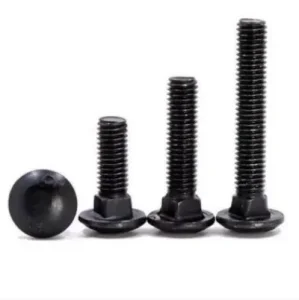
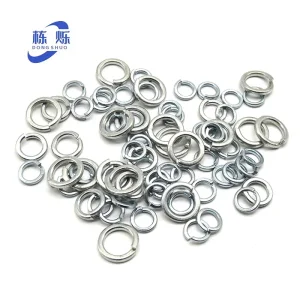
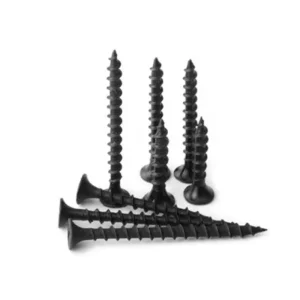
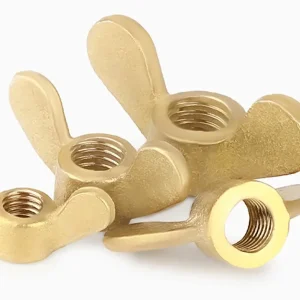
Browse our selection of specialized industrial fasteners designed for construction, manufacturing, and electrical applications.
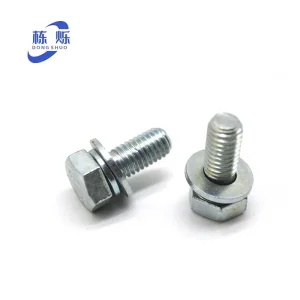
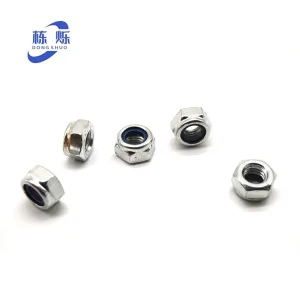
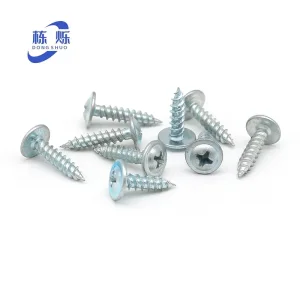
Get in touch with our engineering team for help with dimensional drawings, material grades, or bulk logistics schedules tailored for your project in the ACT and Australia-wide.
 Dongshuo Fastener