Why Use a Bolt With Washer and Nut?

Time:2026-11-22 Author:Sophia
0%

A Bolt With Washer And Nut is a simple-looking assembly with a demanding job: hold parts together under vibration, changing loads, and imperfect surfaces. The bolt provides tension, while the nut helps maintain the clamping force. The washer spreads bearing pressure across a wider area and can help protect the surface beneath the fastener. That small ring matters.

The scale of the fastener industry reflects how often these details affect real equipment. Grand View Research estimated the global fasteners market at USD 90.6 billion in 2023. Its report covers many fastener types, not just bolted joints, so the figure is context—not proof that every joint needs a washer. For engineering guidance, NASA’s Fastener Design Manual (NASA Reference Publication 1228) explains how preload, friction, and joint design influence fastener performance. In practice, tightening torque alone cannot reveal the exact clamp force, because friction varies between parts and installations.

It is tempting to treat the washer as a cure-all. It isn’t. A washer may be unsuitable if its material, size, or hardness does not match the joint; a locking nut or other retention method may also be needed in some conditions. The right choice depends on the load, materials, vibration, and assembly procedure. A careful design checks those details—and admits when field conditions are less tidy than the drawing. That is the useful starting point for understanding why a bolt, washer, and nut are often used together.
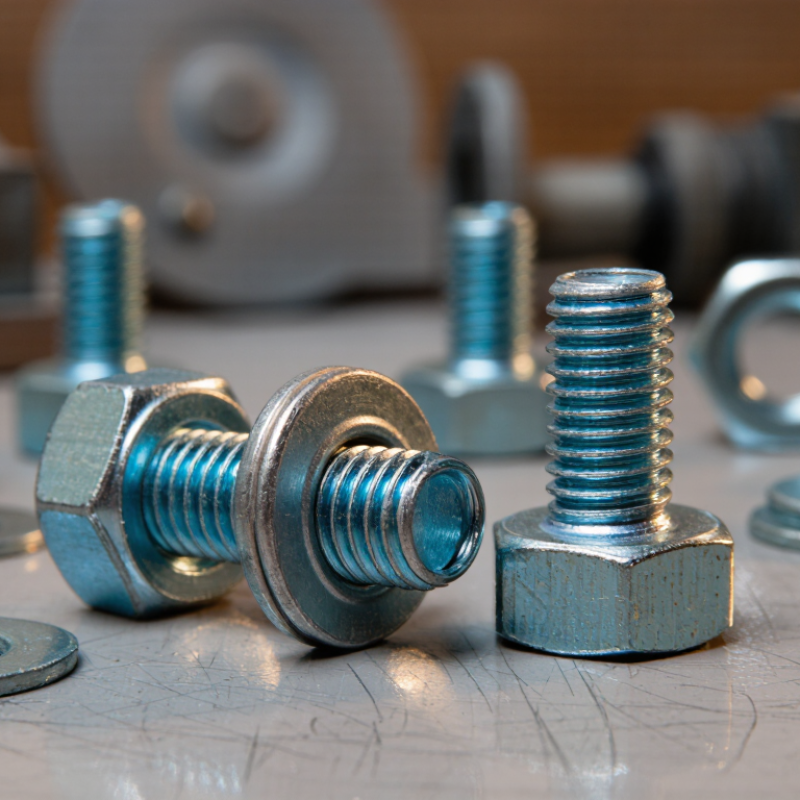
Why Use a Bolt With Washer and Nut?

How a Bolt, Washer, and Nut Form a Fastened Joint

A bolt, washer, and nut work as one clamping system. The bolt passes through aligned holes in two or more parts, while the nut engages its threads on the far side. Tightening the nut stretches the bolt slightly and presses the parts together. That clamping force—not the bolt simply holding parts by its shank—usually helps keep a joint from slipping under ordinary loads. Small detail, big effect.

The washer sits beneath the rotating nut or bolt head, depending on the joint’s design and access. Its wider bearing face spreads contact pressure, helps protect soft or painted surfaces from damage, and can reduce settling beneath the fastener. A plain washer does not automatically prevent loosening; vibration, poor fit, or incorrect tightening can still reduce clamping force. In practice, washer placement is easy to overlook when working in a cramped space. Check that it lies flat and does not bridge a slot or edge. Follow the specified tightening method, since material, bolt size, lubrication, and joint stiffness affect the required torque. If the parts keep moving, inspect the fit instead of simply tightening harder. That instinct is tempting, but not always right.

The Role of Each Component in the Assembly

Why Use a Bolt With Washer and Nut?

The Role of Each Component in the Assembly

A bolt passes through the joined parts and provides the clamping force. The nut engages the bolt’s threads and helps maintain that force as the assembly is tightened. The washer sits beneath the bolt head or nut, spreading pressure across a wider area. This can help protect softer surfaces, such as painted steel or wood, from dents and damage. Each part has a distinct job. Together, they create a practical, serviceable connection.

Tips: Check that the bolt length leaves enough thread for the nut to engage fully. Use a washer that fits the bolt and bears evenly on the surface. Tighten to the specified torque when one is available.

The details matter. A washer cannot compensate for a hole that is too large or a joint that shifts under load. For vibration, a suitable locking nut or other approved locking method may be needed; a standard nut alone may loosen in some conditions. I’ve also seen assemblies fail because parts felt tight but had uneven contact. Check that the surfaces sit flat, then inspect the connection after installation when the application calls for it.

How Washers Spread Load and Protect Surfaces

Why Use a Bolt With Washer and Nut?

How Washers Spread Load and Protect Surfaces

A bolt and nut create a clamping force that holds parts together. The washer sits beneath the bolt head or nut, spreading that force across a wider area. This matters when fastening thin sheet metal, soft wood, or a painted panel. Without a washer, a small contact area can dent the surface or press into it over time. Small parts, big difference.

Picture tightening a bolt through a thin steel bracket. The washer bears against the bracket, helping prevent the nut from digging into the metal. On a painted surface, a flat, clean washer can also reduce direct scraping from the rotating nut. It is not a guarantee against scratches, though. Grit trapped underneath can still mark the finish, so clean contact surfaces matter.

Choose a washer with a suitable diameter and thickness for the fastener and material. A washer that is too small may not spread the load enough; an oversized one can interfere with nearby parts. Tighten the nut evenly, and avoid forcing it down until the surface bends. I sometimes treat a washer as a simple safeguard, but it cannot compensate for a poor fit or excessive torque. Check the joint after assembly, especially if the material is soft or likely to settle.

Why the Combination Resists Loosening and Joint Failure

A bolt, washer, and nut work as a clamped system, not three unrelated parts. Tightening the nut stretches the bolt slightly and creates tension that presses the joined surfaces together. The washer sits beneath the rotating part, spreading pressure across a wider area. This helps protect softer material from dents and reduces the chance that the fastener sinks into the surface.

The clamping force is what helps resist loosening. When a joint carries a changing load, such as a bracket that vibrates during machine operation, the washer can limit local wear and help preserve a more even bearing surface. The nut keeps the bolt under tension, while the bolt’s grip holds the parts together. Small details matter. A washer that is too small, bent, or poorly seated may not distribute load as intended. A plain washer also does not guarantee protection against vibration loosening.

Joint failure can begin when clamping force falls, allowing parts to shift, fret, or repeatedly strike one another. I have seen how a slightly misaligned joint can make a seemingly secure fastener loosen sooner than expected. Check that the washer rests flat and matches the fastener and material. Tighten to the specification for the joint; excessive torque can damage threads or crush softer parts. It is not foolproof. For severe vibration, the design may need a suitable locking feature or a different fastening method.

Why Use a Bolt, Washer, and Nut?

A washer provides a broader bearing surface beneath the fastener, helping spread clamp load across the joined material.

Bars show the calculated annular footprint area for ISO 7089 plain washers, based on nominal outside and inside diameters. This geometric area is not a measured pressure or loosening-resistance result. A washer can help limit local bearing damage, but does not by itself guarantee that a joint will resist loosening.

Where to Use This Fastener and What to Consider

A bolt, washer, and nut suit joints that need a removable, through-fastened connection. They are common on equipment frames, sheet-metal brackets, and timber assemblies with accessible backsides. The washer spreads bearing pressure around the hole and can reduce surface damage as the nut turns. That helps on softer materials. Not always.

Choose the washer’s size and thickness for the load and surface, rather than treating any washer as suitable. Check bolt strength, hole clearance, edge distance, and material compatibility. Dissimilar metals can corrode where moisture collects. For timber, a wider washer may help prevent the nut from sinking into the wood, but it cannot compensate for weak or split material. Vibration also matters; a plain washer alone does not secure a joint against loosening.

Tightening deserves care. NASA’s Fastener Design Manual (RP-1228) reports that torque-controlled tightening can produce preload variation of roughly ±25%, partly because friction changes at threads and bearing surfaces. So a torque value is not a direct measurement of clamp force. Use the specified tightening method for critical joints, and inspect the joint after assembly. A washer can improve load transfer, but it does not fix poor fit, damaged threads, or the wrong fastener grade.

FAQS

What does each part do in a bolt, washer, and nut assembly?

The bolt passes through the joined parts and provides clamping force. The nut engages the threads. The washer spreads pressure beneath the bolt head or nut.

How can a washer protect a surface?

It spreads pressure over a wider area, which can reduce dents in painted steel or wood. Small parts matter.

How much thread should extend beyond the joined parts?

Leave enough thread for the nut to engage fully. Check the fit before tightening, especially when the parts are thick.

Does a plain washer prevent loosening from vibration?

No. It can help maintain an even bearing surface, but it does not guarantee a joint will resist vibration. A suitable locking feature may be needed.

Where is this type of fastener useful?

It suits removable, through-fastened joints, such as equipment frames, sheet-metal brackets, and timber assemblies with accessible backsides.

What should I check before tightening the assembly?

Confirm that the washer fits and sits flat. Check hole clearance, edge distance, bolt strength, and material compatibility. Not always obvious.

Can tightening a bolt too much cause damage?

Yes. Excessive torque can damage threads or crush softer material. Use the specified method when available.

Does a torque value show the exact clamping force?

No. Friction can cause variation. One manual reports preload variation of roughly ±25% with torque-controlled tightening, so critical joints need the specified method and inspection.

Conclusion

A Bolt With Washer And Nut creates a secure mechanical joint by passing the bolt through aligned parts and tightening the nut on the opposite side. Each component has a distinct role: the bolt provides the main clamping force, the nut holds the assembly together, and the washer sits beneath a contact surface to support the connection. Together, they offer a practical way to fasten materials while allowing the joint to be assembled or serviced when needed.

A washer helps spread the clamping load over a wider area, reducing pressure on the surface and helping prevent damage around the hole. When properly selected and tightened, the combination can also help limit loosening and reduce the risk of joint failure caused by movement or vibration. This fastener is useful in many general assembly and repair tasks, but material compatibility, dimensions, expected loads, surface conditions, and the working environment should be considered before choosing the components.


Sophia

Sophia

Sophia is a dedicated marketing professional with an exceptional depth of knowledge about her company's products and services. With a keen understanding of market trends and customer needs, she crafts insightful blog posts that not only inform but also engage readers, enriching the company’s online......