A Flat Head Screw Head is designed to sit flush with a surface when paired with a matching countersink. Its broad, flat top meets a tapered underside, which rests inside the cone-shaped recess. Picture a screw disappearing neatly into a cabinet panel, leaving no raised edge to catch a cloth. The term can be confusing: “flat head” describes the top, while the underside is angled. That distinction matters.
The wider fastener industry gives this small component useful context. Grand View Research estimated the global industrial fasteners market at USD 90.81 billion in 2023. That figure covers many fastener types, not flat head screws alone. For a more technical reference, ISO 10642 specifies dimensions and requirements for hexagon socket countersunk head screws. Always check the relevant specification before treating one screw style as interchangeable with another. A close fit is not proof of a correct fit.
Fastener engineer John H. Bickford’s published work on bolted joints emphasizes the importance of controlling clamp load. In paraphrase: a reliable joint depends on the force holding its parts together, not simply on how tight the screw looks. This is a useful reminder, though it is not a verified direct quotation. Head angle, material, recess depth, and installation method can all affect the result. Even the familiar label “flat head” is not perfectly consistent across suppliers. That detail deserves a second look.
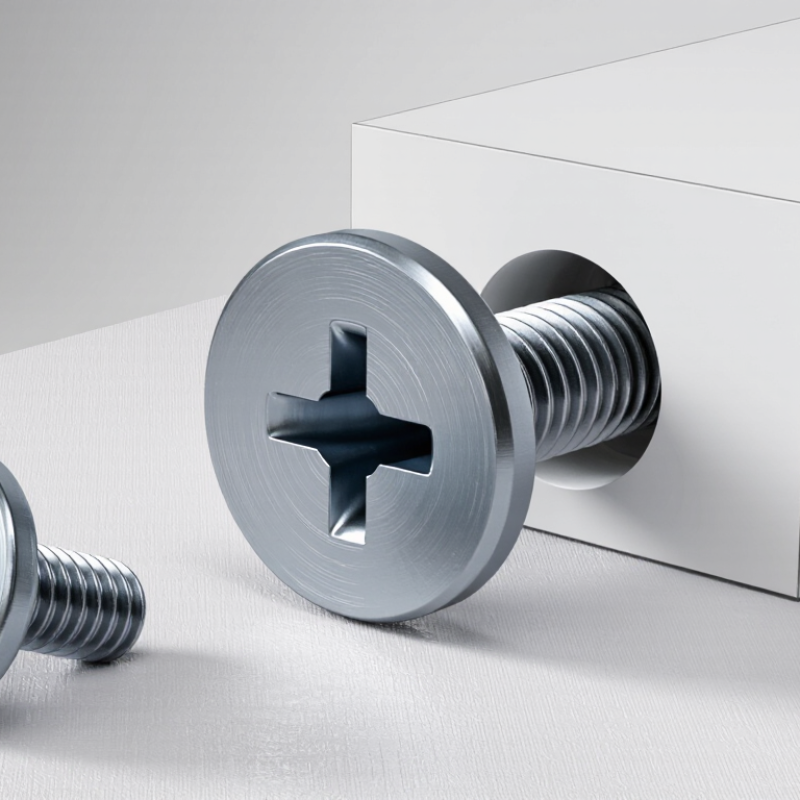
A flat head screw is defined by its cone-shaped underside and usually flat top. When fitted into a matching countersunk hole, the head can sit level with the surrounding surface. That flush fit is its defining feature. The term describes the head shape, not the drive recess. Slotted, Phillips, and other drive types can all appear on flat head screws.
The underside angle must match the countersink. Common angles vary by screw standard and intended material, so “flat head” alone does not specify an exact angle. Wood screws, machine screws, and sheet-metal screws may have different dimensions. Check the drawing or product specification before drilling. A visual guess can be wrong. If the hole is too shallow, the head stays proud. If it is too deep, the head may sink and leave less material supporting it.
Test the fit on a scrap piece of the same material. The rim should meet the countersink evenly, without rocking or crushing the surface. For softer wood, a gentle pilot countersink can help prevent splintering. Fit varies. Coatings, worn holes, and tool angle can all affect the result, so “flush” is a target rather than a guarantee.
How Its Shape Creates a Flush-Fitting Surface
A flat head screw has a conical underside that narrows toward the threaded shaft. That angled surface seats inside a matching countersunk hole. As the screw turns, the head moves into the cone rather than resting on top of the material. When the angles align, its top can sit level with the surrounding surface.
A clean fit matters.
The result depends on more than the screw alone. Countersink angles vary, so check that the screw and prepared hole are compatible. A mismatch can leave the head proud or make it bind before seating.
In wood, a pilot hole and steady pressure help reduce splitting. In metal, use an appropriately sized countersink tool and remove sharp burrs. Do not force it. Over-tightening can damage the seat or strip the drive.
It is easy to assume “flush” means perfectly invisible, but small differences in angle, material, and tool control can remain. Check the fit from the side before assembly is complete.
A flat head screw is designed to sit flush in a countersunk hole, leaving a smooth surface that can slide beneath a panel or trim. Its material affects strength, weight, and corrosion resistance. Carbon steel is common for general fastening; stainless steel suits damp or corrosive settings, while brass offers a softer, non-rusting option for lighter-duty work. Material choice is not a simple strength contest. The surrounding material and exposure matter too.
Industry figures offer useful context, but not screw-specific market data. The World Steel Association reported 1,888.2 million tonnes of crude steel production worldwide in 2023. The World Stainless Association reported 58.4 million tonnes of stainless steel production that year. For head geometry, ISO 10642 covers countersunk screws with hexagon socket drives; other common drives include slotted, Phillips, and six-lobed designs. A slotted drive is easy to recognize but can let a screwdriver slip. A hex socket or six-lobed recess usually gives the tool a firmer seat. Fit matters. Even a well-made screw can sit proud if the countersink angle does not match its head. That detail is easy to overlook.
What Is a Flat Head Screw Head?
Where Flat Head Screws Are Used
Flat head screws are chosen when a fastener must sit nearly flush with a surface. A tapered head rests inside a matching countersink, leaving fewer edges to catch fabric, tools, or sliding parts. You’ll find them in cabinet doors, furniture panels, hinges, trim, and metal covers. On a tabletop, the result feels smoother under your palm. The countersink must match the screw; otherwise, the head may sit proud or pull unevenly.
In woodworking, they are common for joining panels and attaching hardware, but head shape alone does not determine joint strength. The USDA Forest Products Laboratory’s Wood Handbook (FPL-GTR-282, 2021) discusses screw-withdrawal data in relation to wood specific gravity, screw diameter, and threaded penetration. That matters in practice: a screw holding a hinge in dense hardwood may behave differently from one driven into a softer panel. Match the screw and pilot hole to the material, and avoid over-tightening. A stripped hole is frustrating.
Flat heads also suit sheet-metal assemblies and fixtures where a projecting head could interfere with another part. In those settings, designers typically prepare a countersink or use material already formed for the head. The trade-off is worth checking: countersinking removes material, and thin stock may not leave much support beneath the screw. A flush finish looks tidy, but it is not automatically a stronger connection.
Typical countersink angles for common flat-head screw families
A flat head has a conical underside designed to sit flush in a matching countersunk hole. Flat-head screws are commonly used for panels, fixtures, and other surfaces where a protruding screw head could interfere. The angles shown are typical for these screw families; always match the countersink to the screw’s specified standard.
Choosing a flat head screw starts with the surface and the load. Its cone-shaped head can sit flush in a matching countersink, leaving fewer edges to catch on fabric or tools. Check the screw’s stated head angle against the countersink; angles can vary. Fit matters. A mismatch may leave the head proud or make it bear unevenly. Choose a length that reaches the material securely without piercing the far side, and match the screw material to the job’s environment. For wood, a coarse thread often grips well; for metal, use a screw and prepared hole suited to the sheet thickness.
Before installation, mark the center and drill a pilot hole if the material needs one. Use a countersink bit to create a shallow seat, then test the screw by hand. The head should meet the surface evenly, not rock on its rim. Start driving slowly with the correct driver bit, keeping the tool straight. Stop when the head sits flush. Do not force it. Too much torque can strip the drive or split wood near an edge. Even careful measuring can leave a tiny rim, especially in uneven material; check the fit before fastening the full assembly.
Its conical underside fits into a matching countersunk hole. The head can then sit level with the surrounding surface.
No. Head angles can vary, and a mismatch may leave the head raised or cause it to bind. Check the fit.
Place the screw in the prepared hole by hand. It should meet the surface evenly, without rocking on its rim.
Often, yes. A pilot hole and steady pressure can help reduce splitting, especially near an edge. Wood can still split.
Use a countersink tool suited to the hole, then remove sharp burrs. Check that the screw seats evenly.
Keep the driver straight and stop when the head sits flush. Too much torque can strip the drive or damage the seat.
Choose a length that holds securely without piercing the far side. Also match the screw material to the job’s environment.
Not always. Uneven material, angle differences, or tool control can leave a tiny rim. I still check from the side.
A Flat Head Screw Head is designed with a broad, cone-shaped underside and a flat top. When paired with a countersunk hole, it sits level with or slightly below the surrounding surface, creating a smooth finish that is less likely to catch on nearby objects. This shape is useful when a clean, unobstructed surface matters, but the material and hole must be suitable for countersinking.
Flat head screws are made from materials such as steel, stainless steel, and brass, and may have slotted, cross-shaped, or other drive types. They are commonly used in woodworking, cabinetry, furniture, and light construction. To choose one, consider the material being joined, the required length and strength, the environment, and the drive tool available. For installation, make a properly sized pilot hole and countersink where needed, then drive the screw straight and steadily. Avoid overtightening, which can damage the surface or the screw head.

Dongshuo Fastener