Choosing a dependable Flat Head Screw supplier requires more than comparing prices. Buyers must examine material quality, thread accuracy, head geometry, coatings, and production consistency. A screw may look polished in a catalog. Its performance appears later, under torque, vibration, moisture, or repeated assembly.
This guide reviews ten leading Flat Head Screw suppliers worldwide. The selection considers manufacturing experience, certification practices, customization ability, delivery reliability, and technical support. It also considers practical details, such as clean countersinking, burr-free threads, and stable packaging. These small details matter on an assembly line.
Fastener educator Carmen Vertullo offers a useful principle: “A fastener is only as good as the joint it serves.” That idea shapes this comparison. The best supplier is not always the largest one. Sometimes, a specialized manufacturer offers better control, clearer communication, or more suitable materials.
No ranking is perfect. Regional availability changes. Lead times shift. Certification claims still need verification. Buyers should request samples, inspection reports, and current compliance documents before placing large orders. This is especially important for stainless steel, alloy steel, and coated Flat Head Screw products.
The following suppliers represent strong options for different purchasing needs. Some focus on volume production. Others support custom dimensions or demanding industrial applications. Read beyond the headline. The right choice depends on the joint, environment, tolerance, and installation method.
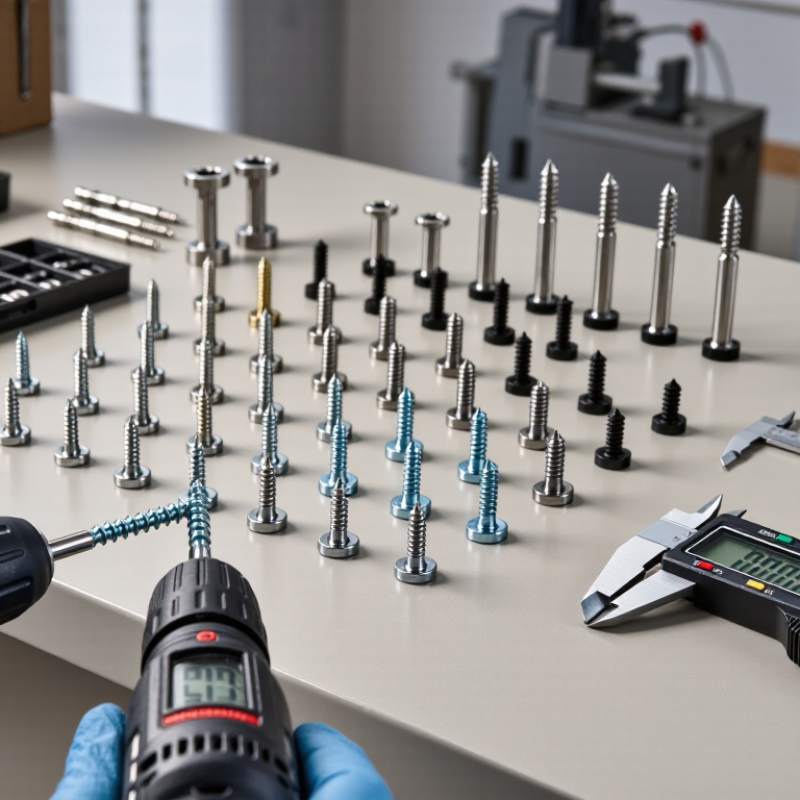
Flat head screws, often called countersunk screws, are designed to sit flush with a material’s surface. Their angled underside creates a tapered seat inside a pre-drilled hole. This design prevents raised fasteners from interfering with panels, moving parts, or finished surfaces. A clean fit matters.
In industrial assembly, these screws secure machine guards, electrical enclosures, furniture hardware, automotive trim, and precision equipment. Engineers commonly select stainless steel for corrosion resistance, alloy steel for higher strength, and coated steel for controlled environmental exposure. The drive style also affects installation. Internal hex and Torx-style drives usually provide better torque control than simple slotted heads. However, the correct choice depends on tool access, production speed, and maintenance conditions.
Field experience shows that hole preparation is often overlooked. A screw may appear defective when the countersink angle or depth is incorrect. Operators should match the screw angle, thread size, length, and material to the joint. Overtightening can strip threads or distort thin sheet metal. Under-tightening can allow vibration and joint movement. Torque testing improves repeatability, although real assemblies may behave differently from laboratory samples. That uncertainty deserves attention.
Surface finish also influences performance. Rough edges can create stress points beneath the head. Clean contact improves seating. For critical equipment, inspection records should include lot details, dimensions, coating condition, and torque results. These checks help buyers compare suppliers more reliably and reduce avoidable assembly failures.
Flat head screws are designed to sit flush with a countersunk surface. The chart shows common ISO metric nominal diameters used across industrial assembly, equipment manufacturing, furniture hardware, automotive components, and structural sheet-metal work.
10 Best Flat Head Screw Suppliers Worldwide
Evaluating global flat head screw suppliers requires more than comparing unit prices. Start with dimensional control. A reliable supplier should verify head angle, drive fit, thread accuracy, and surface finish against the required ISO or national standard. ISO 7046 covers several countersunk screw specifications. Ask for inspection reports, material certificates, and sample measurements before placing large orders.
Material capability also matters. The World Steel Association reported 1.89 billion tonnes of crude steel production in 2023. That scale does not guarantee consistent screw quality. Request proof of grade, hardness, tensile strength, and coating performance. Review heat-treatment records and batch traceability. The ISO Survey 2022 recorded more than 1.26 million ISO 9001 certificates worldwide, yet certification alone cannot replace factory audits. I have seen polished samples hide inconsistent threads. That risk deserves attention.
Tips: Compare at least three suppliers using the same drawing and test plan. Check minimum order quantities, tooling fees, packaging, lead times, and corrective-action procedures. Request salt-spray or torque data when corrosion resistance matters. Confirm whether testing uses an independent laboratory. A supplier that answers slowly may still produce good parts, but poor communication can disrupt production. Evaluate evidence, not promises.
10 Best Flat Head Screw Suppliers Worldwide
Profiles of the Ten Leading Flat Head Screw Manufacturers
The ten leading flat head screw manufacturers serve construction, furniture, electronics, and industrial assembly markets. Grand View Research estimates the global industrial fasteners market will expand steadily through 2030, supported by machinery, transport, and building demand. This growth increases pressure on suppliers to prove consistency, not merely offer low prices.
The first supplier profile represents high-volume cold-heading production, with automated inspection and tight thread control. Another focuses on stainless steel screws for humid environments, where corrosion resistance matters most. A third specializes in miniature flat head screws used in circuit housings and precision equipment. Two manufacturers stand out for custom lengths, unusual drives, and short prototype runs. Their engineers usually review drawings before quoting.
The remaining profiles cover hardened alloy steel, tamper-resistant designs, furniture-grade finishes, and export packaging. One supplier emphasizes traceability, linking heat numbers with inspection records. Another provides salt-spray testing, although test duration does not always predict field performance. That deserves caution. ASTM F606/F606M and ISO 898-1 offer useful mechanical-testing frameworks, but buyers should verify the exact material and coating scope. Industry reports from MarketsandMarkets also identify automotive and machinery as major fastener demand centers, making batch consistency increasingly important. A practical audit should examine thread gauges, countersink depth, plating thickness, carton labeling, and rejected-part records. The cheapest quotation can hide rework costs. Sometimes, it does.
Choosing among the 10 best flat head screw suppliers requires more than comparing catalog prices. In factory purchasing, I check thread consistency, head dimensions, surface finish, and material certificates. A reliable supplier provides samples from the same production line. This matters. A polished sample may not represent regular output. I also inspect packaging, because loose screws can suffer scratches, moisture, or mixed sizes during transport.
Customization affects both performance and cost. Suppliers may adjust diameter, length, drive type, coating, hardness, or packaging. Clear drawings reduce production errors. Small changes can require new tooling. Ask about minimum order quantities and approval samples before signing a purchase agreement. I have found that some suppliers accept complex requests too quickly. That confidence is not always reassuring. Technical feedback is more valuable than an instant promise.
Pricing should include tooling, inspection, packaging, freight, and possible rework. The lowest quotation may hide weak quality control. Request a detailed breakdown and define acceptable defect levels. Delivery performance depends on production capacity, raw material availability, and export preparation. Ask for a realistic production schedule, not an optimistic estimate. Track sample approval, manufacturing, inspection, and dispatch separately. A supplier with transparent updates is easier to manage when delays occur. Still, no evaluation method is perfect. Unexpected material shortages can disrupt even careful planning.
When selecting a flat head screw supplier, start with the application, not the catalog. Define the required diameter, length, drive style, thread type, and head angle. Confirm whether the screw will face moisture, heat, vibration, or repeated assembly. A supplier should explain material choices clearly, such as carbon steel, stainless steel, or specialized alloys.
Ask for measurable quality evidence. Useful documents include material certificates, dimensional inspection reports, coating specifications, and batch traceability records. Check whether the supplier follows recognized manufacturing standards and uses calibrated inspection equipment. Request samples from a normal production batch, not specially prepared pieces. Test thread fit, head seating, surface finish, and torque performance in your own assembly.
Communication reveals practical reliability. Ask about minimum order quantities, production capacity, lead times, packaging, and replacement procedures. A capable supplier should discuss tolerance limits instead of promising that every part is “perfect.” That phrase deserves caution. I have found that clear drawings and written acceptance criteria prevent more problems than friendly sales conversations. Price still matters, but compare total cost, including rejected parts, delays, freight, and inspection time. Review how the supplier handles engineering changes. A strong partner records revisions and confirms approval before production. No scorecard is perfect. Leave room to reassess performance after the first delivery.
| Supplier Profile | Primary Supply Region | Typical Product Standards | Common Materials | Typical Size Range | Surface Options | Customization | Indicative MOQ | Best-Fit Buyer |
|---|---|---|---|---|---|---|---|---|
| Profile 01 | East Asia | ISO 898-1; DIN 7991; ISO 10642 | Carbon steel, stainless steel | M2–M12; approximately 4–100 mm long | Plain, zinc plated, black oxide | Standard thread, drive, length and packaging changes | 1,000–10,000 pieces | OEM and high-volume buyers |
| Profile 02 | South Asia | DIN 7991; ISO 10642; ASTM F835 where specified | Alloy steel, 304 stainless steel, 316 stainless steel | M3–M16; approximately 5–120 mm long | Zinc flake, passivated, natural stainless | Nonstandard lengths, special drives and material certificates | 500–5,000 pieces | Industrial distributors |
| Profile 03 | Southeast Asia | ISO 7046; DIN 965; ISO 14583 | Low-carbon steel, stainless steel | M2–M10; approximately 4–80 mm long | Bright zinc, black zinc, nickel plated | Metric thread, head style and carton labeling | 2,000–20,000 pieces | Electronics and appliance assembly |
| Profile 04 | Central Europe | DIN 7991; ISO 10642; EN 10204 documentation | Property class 8.8 and 10.9 steel, A2 and A4 stainless steel | M3–M20; approximately 6–160 mm long | Zinc plated, zinc flake, passivated | Traceability, inspection plans and technical documentation | 100–2,000 pieces | Automotive and machinery manufacturers |
| Profile 05 | North America | ASME B18.3; ASTM F835; SAE J429 where applicable | Alloy steel, stainless steel, brass | #2–3/4 inch; approximately 1/8–6 inches long | Plain, black oxide, zinc plated | Inch threads, special drives, kitting and local stocking | 100–5,000 pieces | MRO and maintenance buyers |
| Profile 06 | Eastern Europe | ISO 14583; ISO 10642; DIN 7991 | Carbon steel, alloy steel, A2 stainless steel | M3–M16; approximately 5–140 mm long | Electro-zinc, black oxide, plain | Small-batch machining and mixed-size orders | 250–3,000 pieces | Prototype and medium-volume production |
| Profile 07 | Turkey and the Middle East | DIN 7991; ISO 10642; ISO 898-1 | Carbon steel, alloy steel, stainless steel | M4–M20; approximately 8–180 mm long | Zinc plated, hot-dip galvanized, plain | Large-diameter sizes, bulk packaging and export documentation | 500–5,000 pieces | Construction and heavy equipment |
| Profile 08 | Western Europe | ISO 7046; ISO 14583; REACH and RoHS declarations when requested | Stainless steel, brass, aluminum | M1.6–M10; approximately 2–80 mm long | Natural, passivated, nickel plated | Clean-room packaging, material traceability and precision tolerances | 100–2,000 pieces | Medical, laboratory and precision equipment |
| Profile 09 | Latin America | ISO 10642; DIN 7991; local metric fastener specifications | Carbon steel, stainless steel | M3–M16; approximately 5–120 mm long | Zinc plated, black oxide, plain | Regional inventory, private-label packaging and replenishment programs | 500–10,000 pieces | Distributors and hardware retailers |
| Profile 10 | Global Specialty Fastener Network | Customer-specified ISO, DIN, ASME or ASTM requirements | Titanium, nickel alloy, stainless steel, alloy steel | M2–M24; approximately 4–220 mm long | Passivated, dry-film lubricant, anodized or customer-specified coating | Engineering support, special alloys, prototypes and full inspection reports | 25–1,000 pieces | Aerospace, energy and specialized engineering |
| Selection note: The profiles above are anonymous, non-branded market benchmarks. Confirm the supplier's current stock, material certificates, mechanical-property class, coating compliance, inspection records, lead time and delivered cost before placing an order. Standards, dimensions, finishes and minimum order quantities vary by product drawing and quotation. | ||||||||
It sits flush with the material surface. Its angled underside fits a countersunk hole. This reduces interference with panels and moving parts.
They secure machine guards, electrical enclosures, furniture hardware, vehicle trim, and precision equipment. A smooth surface can matter greatly.
Stainless steel suits humid or corrosive environments. Alloy steel provides higher strength. Coated steel can suit controlled conditions. The environment should guide the choice.
The hole angle and depth must match the screw head. Poor preparation can leave the head raised or poorly supported. The screw may look faulty.
Internal hex and star-shaped drives usually provide stronger torque control. Simple slotted drives may suit limited applications. Tool access and production speed still matter.
Overtightening may strip threads or distort thin sheet metal. Under-tightening may permit vibration and joint movement. Torque testing improves consistency, but assemblies can behave differently.
Request material certificates, dimensional reports, coating details, and batch traceability records. Useful inspection points include thread fit, head seating, and plating thickness. Records matter.
Test samples from regular production batches in your own assembly. Compare rejection rates, delivery reliability, packaging, and replacement procedures. Include freight and inspection costs. The cheapest quote can become expensive.
This article provides a practical overview of the global Flat Head Screw supply market, explaining the screw’s design, installation advantages, material options, and common industrial applications. It also outlines the main criteria for evaluating international suppliers, including manufacturing capability, quality control, material consistency, certification, production capacity, customization services, communication, pricing transparency, and delivery reliability.
The article profiles ten leading types of manufacturers without focusing on brand names, helping readers compare their product quality, dimensional accuracy, surface treatments, customization options, minimum order requirements, pricing, and lead times. It concludes with a clear selection framework for choosing the right Flat Head Screw supplier based on project specifications, operating conditions, budget, order volume, and long-term cooperation goals. This guidance enables purchasing teams and engineers to make informed, efficient, and dependable sourcing decisions.

Dongshuo Fastener