Choosing the right screw thread is crucial in various industries, from construction to manufacturing. Studies indicate that almost 40% of mechanical failures can be traced back to poor thread selection. This highlights the importance of understanding the specific applications and requirements for screw threads.
The market offers a wide variety of screw thread standards, such as UNC, UNF, and metric threads. Each serves different purposes and has distinct characteristics. For instance, coarse threads provide better grip in softer materials, while fine threads allow for more adjustments. However, many overlook these details, leading to inefficiencies.
Deciding on the right screw thread requires not only knowledge but also practical experience. A lack of understanding can result in assembly issues and structural weaknesses. Professionals should refer to reliable resources, such as industry standards and technical manuals, to inform their choices. In an age where precision engineering is critical, making informed decisions about screw threads is more important than ever.
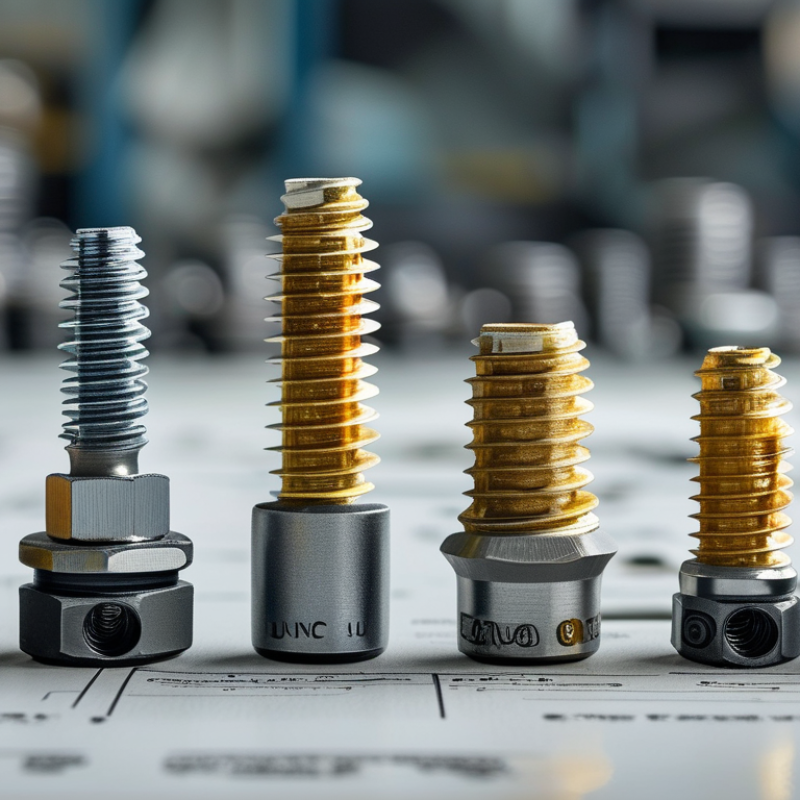
Screw threads play a vital role in mechanical engineering. Understanding the types of screw threads can guide you in selecting the most suitable option for your specific application. From unified threads to metric variants, each type serves distinct functions. According to the Machinery's Handbook, approximately 80% of fasteners utilize either unified or metric threads. Choosing incorrectly can lead to decreased efficiency and potential failures.
Consider using unified threads for general applications. They offer consistent performance in American manufacturing. Metric threads, however, are preferred in European operations, enhancing compatibility with international standards. The International Organization for Standardization reports that 67% of fasteners used worldwide are metric. Thus, knowing your region's standards is essential.
When selecting a screw thread, focus on the load requirements and material compatibility. Soft materials may require finer threads to distribute stress. Opting for thicker threads can prevent stripping in high-stress scenarios. A visual inspection of threads before installation is advisable. Even small defects can lead to failure. Ultimately, being informed about thread characteristics and their uses fosters better decision-making.
| Thread Type | Description | Common Applications | Advantages |
|---|---|---|---|
| Metric Thread | A standardized screw thread measurement system used primarily in Europe. | Used in machinery parts and automotive applications. | Widely available, precise fit, and strength. |
| Unified Thread | A standardized system used commonly in the USA and Canada, based on inches. | Used in domestic appliances and general engineering. | Versatile and easily interchangeable with various tools. |
| Acme Thread | A type of screw thread with a trapezoidal shape, ideal for converting rotary motion into linear motion. | Used in lead screws, vises, and clamps. | High strength and efficient power transmission. |
| Square Thread | Similar to Acme threads but with a square profile, primarily used for heavy loads. | Used in hydraulic machinery and screw jacks. | Minimized friction and high load capacity. |
| Pipe Thread | Screw threads designed for joining pipes, featuring a taper to ensure a tight seal. | Used in plumbing and gas applications. | Leak-proof connection and strong fittings. |
: Unified threads and metric threads are the main types. They serve different purposes and regions.
Incorrect choices can result in reduced efficiency and potential failures in applications.
Consider the load requirements and material compatibility to ensure proper performance.
Exposure to moisture or chemicals may require specific materials or coatings for longevity.
Using thread gauges and calipers can help ensure accurate measurements and compatibility.
Different materials may work better with specific thread types to prevent stripping or failure.
Variations in threads can occur, leading to misalignments if only one sample is measured.
Yes, while finer threads reduce weight for smaller projects, they may weaken overall strength.
Familiarize with thread standards and perform proper measurements to ensure correct applications.
Small defects on threads can lead to failures, making inspection crucial for reliable performance.
When selecting the appropriate screw thread for specific needs, it's crucial to understand the various types of screw threads and their applications. Each type, from unified to metric threads, serves different purposes and has unique characteristics. Key factors to consider include the load requirements, the materials being fastened, and environmental conditions that may affect performance.
Furthermore, ensuring material compatibility is vital, as incompatible materials can lead to failure over time. Avoid common pitfalls, such as overlooking thread standards or mismeasuring, as these mistakes can compromise the integrity of your project. Lastly, having effective measuring techniques is essential for accurately identifying the right screw thread standards, ensuring that you select the most suitable option for your specific applications.

 Dongshuo Fastener