How to Choose the Right Nut and Screw in 2026? The question looks simple beside a tray of shiny hardware. It is not. A reliable Nut & Screw selection begins with the joint’s real purpose, not its appearance. Load, vibration, temperature, moisture, installation space, and service life all matter. A small mismatch can loosen a machine guard or damage delicate threads. That consequence deserves careful attention.
Experienced technicians usually check thread diameter, pitch, form, strength grade, and material together. A metric M8 screw cannot safely replace every M8 option. Its length, tensile class, and engagement depth may differ significantly. Pair compatible thread standards, such as metric with metric, and inspect manufacturer data before ordering. Stainless steel helps resist corrosion, but it may gall during tightening. Zinc-coated carbon steel can suit indoor equipment, yet outdoor exposure demands stronger protection. The environment decides more than the catalogue photograph.
Standards add useful discipline. Relevant ISO, ASME, and manufacturer specifications can clarify dimensions, tolerances, markings, and torque guidance. Traceable suppliers provide certificates and consistent batch information. Test the chosen hardware on a sample joint when safety or repeated vibration matters. A torque wrench, thread gauge, and simple visual inspection can reveal problems early. Do not trust appearance alone. Even careful guides have limits, and real assemblies sometimes behave differently than calculations predict. Recheck the design when loads change, coatings vary, or installation feels unusually tight. The best choice is not merely strong; it is compatible, verifiable, serviceable, and honest about uncertainty.
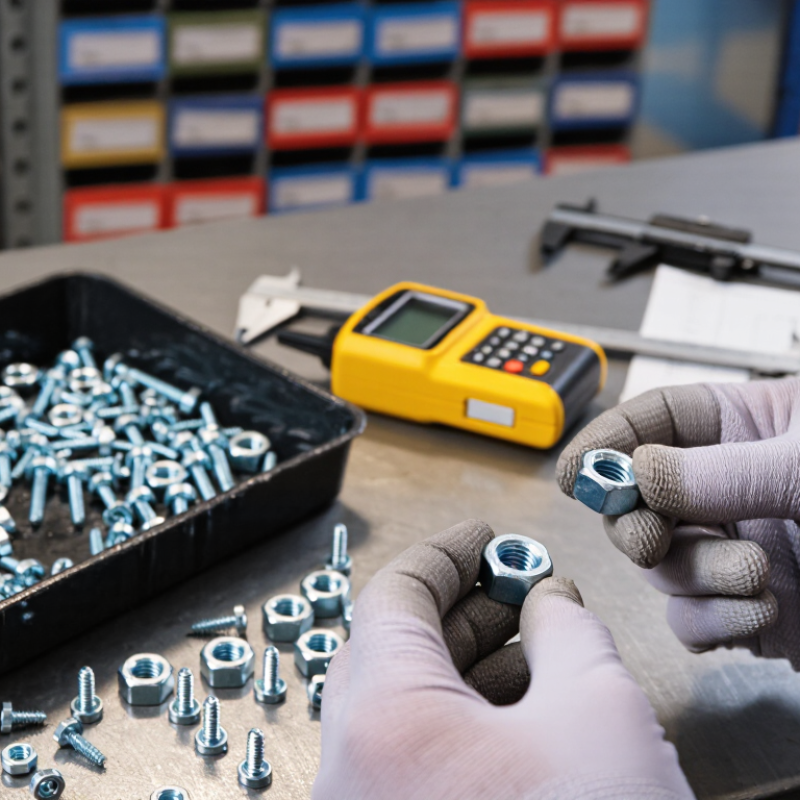
How to Choose the Right Nut and Screw in 2026?
Choosing the right nut and screw starts with their function, not appearance. A nut normally has internal threads and works with a bolt or threaded stud. A screw usually creates its own path or enters a prepared hole. This difference matters during installation. For example, a self-tapping screw suits thin sheet metal, while a machine screw needs a matching tapped hole and usually a nut or insert. Consider the load, vibration, access space, and removal frequency. I once selected a visually similar screw for a vibrating assembly. It loosened within days. The mistake was small, but the function was wrong.
Thread type controls fit and performance. Coarse threads install quickly and handle minor dirt or damage better. They often work well in softer materials. Fine threads provide more precise adjustment and can improve clamping control. However, they may strip or seize more easily during careless installation. Match the thread diameter, pitch, and profile exactly. Metric and unified threads are not interchangeable. A mismatched thread may turn once, then bind suddenly. That warning should never be ignored.
Tips: Check the thread with a gauge before assembly. Confirm the nut matches the screw’s diameter and pitch. Use a washer when the surface could deform. Tighten gradually, preferably with a calibrated torque tool. Inspect damaged or cross-threaded parts instead of forcing them. My own process still needs improvement: I sometimes rely too much on familiar sizes, especially under time pressure.
| Fastener Type | Primary Function | Typical Thread Type | Best Use Case | Key Selection Factors | Important Limitations |
|---|---|---|---|---|---|
| Hex Nut | Clamps parts together when installed on a matching bolt or externally threaded stud. | Coarse or fineMetric or inch | General-purpose structural and equipment assembly. | Match the thread diameter, pitch, thread standard, strength grade, and material to the bolt. | Requires access to the nut for tightening; it does not create threads in sheet material. |
| Nylon-Insert Lock Nut | Resists loosening caused by vibration through a nonmetallic locking insert. | Standard internal threadCoarse or fine | Machinery, vehicles, and assemblies exposed to moderate vibration. | Check temperature, chemical exposure, reusable-use requirements, and bolt engagement. | The nylon insert has limited temperature capability and may lose locking effectiveness after repeated reuse. |
| All-Metal Lock Nut | Maintains clamping resistance without a polymer insert. | Deformed or prevailing-torque thread | Higher-temperature or demanding mechanical applications. | Verify prevailing torque, temperature rating, surface finish, and compatibility with the bolt. | Can damage or wear the mating thread during repeated installation and removal. |
| Flange Nut | Distributes clamping load over a wider area through an integrated flange. | Coarse or fineMetric or inch | Assemblies with oversized holes or surfaces that need broader load distribution. | Measure flange diameter, flange thickness, bearing surface, and clearance around the nut. | May not fit recessed areas or locations with limited radial clearance. |
| Wing Nut | Allows tool-free tightening and removal by hand. | Coarse internal thread | Frequently adjusted covers, fixtures, panels, and light-duty equipment. | Consider hand access, required clamping force, wing size, and corrosion resistance. | Provides less torque and vibration resistance than a properly tightened hex nut. |
| Cage Nut | Provides a floating threaded nut in a square mounting hole. | Metric or inchUsually coarse | Equipment racks, cabinets, panels, and thin sheet-metal frames. | Match the cage dimensions, mounting-hole size, thread standard, and panel thickness. | Incorrect hole dimensions can cause poor retention or prevent installation. |
| Wood Screw | Forms a holding thread in wood and other relatively soft materials. | Deep coarse threadSharp point | Wood framing, furniture, plywood, and softwood or hardwood assemblies. | Select length, shank diameter, head style, drive type, coating, and pilot-hole size. | Coarse wood threads are not intended for use with standard machine-thread nuts. |
| Self-Tapping Screw | Creates or cuts mating threads in a pre-drilled hole during installation. | Forming or cutting threadCoarse or fine | Sheet metal, plastics, and applications without a pre-installed nut. | Choose point style, material thickness, hole size, thread geometry, and installation torque. | Over-torquing can strip the formed thread or damage thin material. |
| Self-Drilling Screw | Drills its own pilot hole and forms or cuts threads in the mating material. | Drill-point thread-forming | Metal-to-metal fastening where access for a separate drilling operation is limited. | Match drill-point capacity to material thickness, select suitable coating, and control speed and torque. | The drill point has a defined thickness range; it is not suitable for material beyond that capacity. |
| Machine Screw | Clamps components through a pre-tapped hole or with a matching nut. | Uniform machine threadMetric or inch | Metal assemblies, instruments, electrical equipment, and precision components. | Match nominal diameter, pitch, length, head style, drive, strength, and corrosion resistance. | Usually requires a tapped hole or nut; it does not normally create its own mating thread. |
| Socket Head Cap Screw | Provides high-strength clamping in a compact head diameter. | Machine threadCoarse or fine | Compact machinery, tooling, molds, and assemblies requiring recessed drive access. | Check head clearance, socket size, engagement length, strength class, and tightening torque. | Requires an internal-hex tool and sufficient clearance above the head for tool insertion. |
| Shoulder Screw | Provides a precise, fixed-diameter shoulder for guiding or pivoting components. | Machine thread below shoulder | Linkages, rollers, bearings, cams, and sliding or rotating mechanisms. | Select shoulder diameter and length first, then match thread size, material, and tolerance. | The shoulder must be fully seated; incorrect length can cause binding or inadequate clamping. |
| Set Screw | Secures one component against another without a projecting screw head. | Machine threadCup, cone, flat, or dog point | Securing hubs, collars, gears, knobs, and pulleys to shafts. | Choose point style, shaft hardness, holding load, access, and the need for a prepared flat. | Point contact can mark or damage the shaft and may provide limited resistance to heavy axial loads. |
| Drywall Screw | Fastens gypsum panels to wood or light-gauge metal framing. | Coarse for woodFine for metal | Interior drywall installation and nonstructural panel attachment. | Choose thread type, length, bugle-head profile, corrosion protection, and framing material. | Not a substitute for structural screws or fasteners specified for load-bearing connections. |
| Anchor Bolt with Nut | Transfers loads from a fixture or structural element into concrete or masonry. | External machine threadCoarse is common | Base plates, equipment supports, posts, and structural attachments. | Verify embedment, edge distance, hole condition, load direction, diameter, and nut compatibility. | Concrete strength and installation quality strongly affect performance; follow the applicable design standard. |
A nut has internal threads and usually works with a bolt or threaded stud. A screw often forms its own path or enters a prepared hole. Function matters more than appearance.
Coarse threads install faster and tolerate minor dirt or damage. They suit many softer materials. Fine threads allow precise adjustment and controlled clamping. They can strip or seize more easily.
No. Match the diameter, pitch, and thread profile exactly. A mismatched thread may turn once, then bind suddenly. Stop immediately.
Stainless steel often suits wet environments, but it is not automatically stronger. Carbon steel with a suitable coating may work outdoors. Coastal salt can damage ordinary coatings quickly.
Yes. Thick coatings can reduce thread engagement. Coated threads may feel tight before full contact. Check coating thickness and actual fit before tightening.
Socket heads work well where wrench access is limited. Hex heads provide strong turning control. Countersunk heads sit nearly flush but need matching holes. Choose the access method first.
Use a washer when the surface is soft, thin, or oversized around the hole. A flange nut spreads pressure across a firm surface. It can replace a separate washer.
Clean the threads and align the parts carefully. Engage several full threads before tightening. Tighten gradually with a calibrated torque tool. Never force a damaged or mismatched thread.
Choose suitable locking hardware and confirm the joint’s clamping force. Inspect the assembly after its first vibration cycle. Published torque values cannot predict every surface condition.
Look for thread damage, coating wear, trapped water, and uneven contact. Check for crushed plastic or bent thin metal. My process still needs improvement; familiar sizes can mislead me under pressure.
Choosing the right Nut & Screw in 2026 begins with understanding how each component functions and how its thread type affects performance. Start by matching the thread size, pitch, and compatibility of the nut and screw to ensure smooth assembly and a secure connection. Consider the material and protective coating carefully, especially when the fastener will face heavy loads, moisture, heat, chemicals, or outdoor conditions. The correct combination can improve strength, durability, and resistance to corrosion.
Next, compare head styles, nut shapes, and installation methods based on available space, tools, and maintenance requirements. Before installation, verify the expected load capacity, dimensional fit, and tightening requirements. It is also important to consider future inspection, adjustment, and replacement needs. By evaluating function, thread compatibility, materials, design, installation, and long-term maintenance together, you can select a reliable Nut & Screw solution that delivers stable performance and reduces the risk of loosening or premature failure.

 Dongshuo Fastener