China Best Screw On Nut Manufacturers For Global Buyers?

Time:2026-09-16 Author:Charlotte
0%

China Best Screw On Nut Manufacturers For Global Buyers? This question deserves more than a factory list. It requires careful attention to material quality, thread accuracy, production experience, and export reliability.

A dependable Screw On Nut manufacturer should provide clear drawings, inspection records, material certificates, and stable sampling results. Buyers should examine thread fit under real assembly conditions. A nut may look perfect in a carton, yet bind during installation. Small defects become expensive problems.

John H. Bickford, author of The Handbook of Bolts and Bolted Joints, emphasized, “A joint is only as good as its installation.” This principle matters when comparing Chinese suppliers. Torque behavior, surface treatment, hardness, and dimensional tolerance can influence the final connection. Factory audits, trial orders, and third-party inspections provide useful evidence.

Details reveal capability. Look for controlled forging lines, calibrated gauges, clean packaging, and operators who understand production tolerances. Ask how rejected parts are separated. Ask how corrosion protection is tested. Some suppliers answer quickly but provide weak documentation. That should raise questions.

The best choice is not always the lowest quotation. It is the manufacturer that combines competitive pricing with repeatable performance, responsive communication, and honest limitations. Even experienced buyers can overlook packaging damage or mixed batches. That is why a practical sourcing process should include samples, technical review, and production follow-up.

This guide examines Chinese Screw On Nut manufacturers through a global buyer’s perspective. It considers quality, customization, certifications, delivery control, and after-sales support. Not every supplier will fit every application. That uncertainty deserves attention.
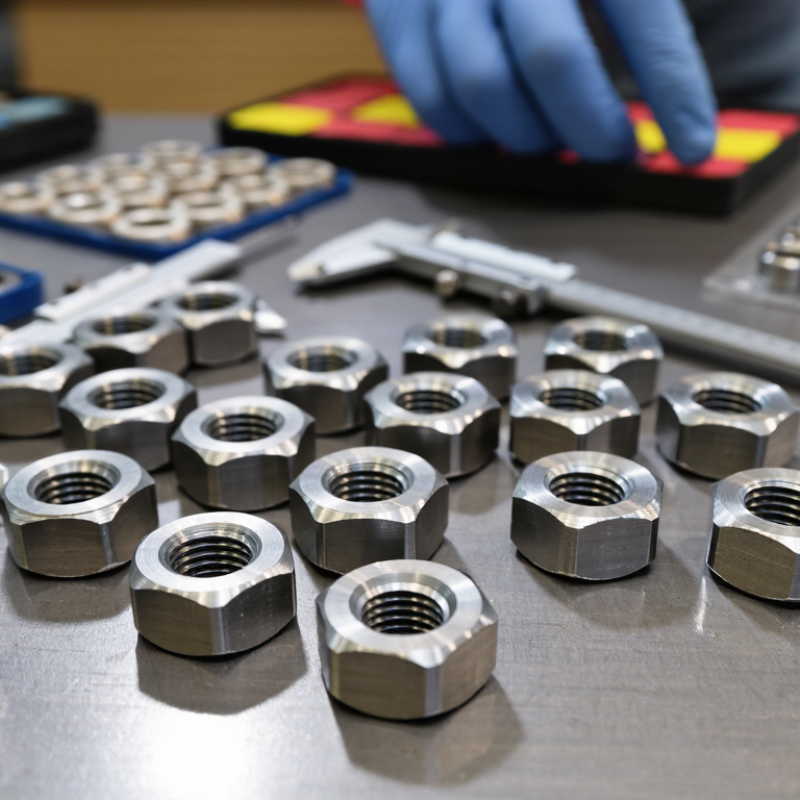
China Best Screw On Nut Manufacturers For Global Buyers?

Types of Screw-On Nuts Manufactured in China

For global buyers comparing China’s screw-on nut manufacturers, product variety deserves close attention. Hex nuts remain the standard choice for machinery, furniture, electrical enclosures, and general assembly. Their six flat sides support spanner tightening and controlled torque. Flange nuts add a built-in bearing surface, helping spread pressure across thin metal. Cap nuts cover exposed threads and create a cleaner, safer finish. Small parts matter.

Wing nuts support hand adjustment where tools are inconvenient. Coupling nuts join two threaded rods and require accurate internal threading along their full length. Knurled nuts offer finger grip in instrument panels and light equipment. T-nuts, barrel nuts, and weld nuts serve furniture and sheet-metal applications, but each needs a different installation method. Chinese factories commonly produce steel, stainless steel, brass, and aluminum versions. Zinc plating can improve corrosion resistance, while passivation suits many stainless-steel parts. Finish choice should match humidity, load, and contact metals.

Experienced buyers should request thread standards, dimensions, hardness, torque expectations, and inspection records before sampling. Reliable manufacturers often check thread fit with gauges, measure coating thickness, and inspect burrs under magnification. Ask for sample testing, not only a polished catalog image. Packaging is easy to overlook. Mixed sizes can damage an otherwise good shipment. Real sourcing is less tidy. A nut may meet the drawing yet fail during repeated assembly. Pilot orders, batch traceability, and clear acceptance limits reduce that risk. Specifications sometimes need revision after field testing. This is practical engineering.

China Screw-On Nut Types for Global Buyers

China manufactures a broad range of screw-on nuts, including hex nuts, nylon insert lock nuts, flange nuts, wing nuts, T-nuts, and cap nuts. The chart uses the ISO 4032 metric hex nut dimensional series as an objective reference for across-flats size by nominal thread diameter.

Reference data: ISO 4032 metric hexagon nuts, coarse-thread nominal sizes from M3 to M16. Actual availability, material, finish, strength class, and dimensions may vary by nut type and purchasing specification.

Key Standards for Selecting a Reliable Chinese Nut Manufacturer

Choosing the best screw-on nut manufacturer in China requires more than comparing quotations. Reliability begins with a clear technical file. Specify material grade, thread type, dimensions, hardness, surface finish, and intended load. Ask for material certificates and calibrated inspection records. Standards matter. Depending on the application, ISO, DIN, ASTM, or GB requirements may apply. Do not accept a general compliance statement without test evidence. Request first-article samples, thread-gauge results, torque checks, and corrosion-testing data. For plated nuts, confirm coating thickness and hydrogen-embrittlement controls where relevant.

Factory capability should be verified on the production floor, not only through a polished website. An effective audit checks incoming inspection, heat-treatment control, machine maintenance, and final sampling. Traceability should connect each carton to a batch, operator record, and inspection report. That detail becomes valuable when a shipment shows inconsistent thread fit. Small gaps matter. Check whether the manufacturer controls subcontracted processes, including plating, packaging, and laboratory testing. Clear corrective-action procedures are a strong reliability signal.

Communication is another selection standard. A dependable supplier confirms drawings, tolerances, packaging marks, delivery terms, and change approvals in writing. Before a large order, compare samples from different production lots. Measure them independently when the application is safety-critical. Price is useful, but unusually low pricing may hide thinner material, weak inspection, or unstable capacity. That warning is easy to overlook. Even qualified factories can make mistakes, so review nonconformities honestly and require measurable improvement.

How Chinese Screw-On Nut Manufacturers Control Product Quality

Chinese screw-on nut manufacturers control quality through layered checks, not one final inspection. The ISO Survey of Management System Standard Certifications 2022 counted 1,265,216 ISO 9001 certificates worldwide. Certification helps, but it does not guarantee every batch performs well.

Reliable factories verify steel certificates before production begins. Spectrometers check chemical composition, while hardness tests detect unsuitable material. During forming, operators inspect thread pitch, outside diameter, and burrs with calibrated gauges. ISO 965-1 provides reference requirements for metric screw threads, while ISO 898-2 covers mechanical properties for nuts. A capable quality team records these results by heat number and production lot. Traceability matters.

Testing continues after plating or surface treatment. Inspectors measure coating thickness, check thread fit, and test tightening torque using digital equipment. Sampling plans often follow ISO 2859-1, which defines acceptance procedures for inspection by attributes. Independent laboratories can verify tensile performance, proof load, and corrosion resistance under relevant standards. Some suppliers still rely too heavily on visual checks. That is a weakness. Buyers should request calibration records, material reports, inspection plans, and recent third-party test results. Factory experience shows that small thread defects can create expensive assembly failures, even when the nut looks perfect. Supplier audits should also examine rejected parts, not only successful samples.

Custom Manufacturing, Materials, and Finishing Options

For global buyers, selecting a screw-on nut manufacturer requires more than comparing unit prices. Custom production starts with the thread profile, outside diameter, height, and required load. Experienced suppliers review drawings, samples, and installation conditions before quoting. This step prevents a nut from fitting in theory but failing on the assembly line. Ask for inspection records, material certificates, and clear production tolerances. Good documentation builds trust.

Material choice should match pressure, temperature, moisture, and contact with other metals. Carbon steel offers strength and cost control. Stainless steel supports corrosion resistance in demanding environments. Brass can provide useful conductivity and easier machining. Aluminum reduces weight, but it may not suit high-load applications. A manufacturer should explain these trade-offs, not simply recommend the most expensive option. Small details matter. Custom thread gauges and first-article samples can expose errors early. Yet sample approval is not enough; batch consistency needs documented checks.

Finishing options include zinc plating, nickel plating, black oxide, passivation, and dry-film treatments. The correct finish depends on corrosion exposure, appearance, friction, and assembly speed. Buyers should confirm coating thickness, salt-spray targets, and possible dimensional changes. One overlooked coating layer can change thread engagement. That lesson is easy to miss. Reliable factories use calibrated gauges, traceable lots, and final visual inspections. They should also discuss packaging for sea or air transport, because damaged threads create avoidable waste. No process is perfect, and honest suppliers will identify limits, production risks, and revisions before mass manufacturing begins.

Export Services and Global Buyer Evaluation Criteria

China Best Screw On Nut Manufacturers For Global Buyers?

For global buyers, export service matters as much as nut geometry. Grand View Research estimates the industrial fasteners market reached about USD 88 billion in 2023. This scale increases supplier choices, but also increases quality variation. Experienced buyers should request thread gauges, material certificates, dimensional reports, and batch traceability. The supplier must confirm thread standards, such as metric or Unified, before production. A small mismatch can stop an entire assembly line.

Reliable export support includes clear quotations, realistic lead times, protective packaging, and accurate customs documents. Ask about Incoterms, carton counts, gross weight, and HS-code experience. The World Bank’s 2023 Logistics Performance Index shows major differences in customs efficiency and shipment reliability across markets. Therefore, buyers should review shipping records, inspection procedures, and response times. ISO 9001 certification can support process confidence, but it cannot replace sample testing. A low price still looks attractive. Sometimes, it creates expensive delays.

Tips: Compare three samples before ordering. Check thread engagement by hand, then measure torque performance. Request salt-spray results for coated nuts, especially for humid routes. Confirm whether testing follows ASTM, ISO, or another agreed standard. Also inspect label accuracy and moisture protection inside each carton. One practical weakness remains: many evaluations focus on factory price, not after-sales communication. Ask who handles claims, how quickly replacements move, and whether corrective-action reports are documented. These details often reveal export maturity better than a polished website.

FAQS

What types of screw-on nuts are commonly manufactured in China?

Common types include hex, flange, cap, wing, coupling, knurled, T-nuts, barrel nuts, and weld nuts. Small parts matter. Each type suits a different installation method.

How should buyers choose the right nut design?

Choose based on load, available tools, exposed threads, adjustment needs, and installation space. Flange nuts spread pressure across thin metal. Wing nuts allow quick hand tightening. The simplest design is not always the best.

Which materials are available for custom screw-on nuts?

Factories commonly produce carbon steel, stainless steel, brass, and aluminum nuts. Carbon steel supports strength and cost control. Stainless steel suits damp environments. Aluminum reduces weight but may handle less load.

What information should buyers provide for a custom nut?

Provide thread standards, dimensions, hardness, load requirements, torque expectations, and installation conditions. Drawings and physical samples can prevent misunderstandings. A nut may fit the drawing yet fail during assembly.

How do manufacturers control nut quality during production?

Quality checks can include material verification, thread gauges, diameter measurements, hardness testing, and burr inspection. Inspectors may examine threads under magnification. Records should connect results with production lots. Traceability matters.

What tests should buyers request before placing a larger order?

Request sample fitting, tightening torque tests, coating measurements, and mechanical performance checks. Independent testing can verify demanding requirements. Do not rely only on catalog photographs. They can look perfect.

Which surface finishes are available, and why do they matter?

Options may include zinc plating, nickel plating, black oxide, passivation, and dry-film treatments. The finish should match moisture, friction, appearance, and contact metals. A coating can change thread engagement. That detail is easy to miss.

How can buyers reduce shipment and batch problems?

Use pilot orders, clear acceptance limits, batch traceability, and protective packaging. Separate mixed sizes carefully. Damaged threads create avoidable waste. Field testing may require revised specifications. That is practical engineering.

Conclusion

China has become a major source of Screw On Nut products for global buyers, offering a wide range of designs for construction, machinery, automotive, furniture, and general industrial applications. Manufacturers may produce standard, locking, flange, cap, and custom nuts in materials such as carbon steel, stainless steel, brass, and aluminum. When selecting a reliable supplier, buyers should evaluate dimensional accuracy, material traceability, production capacity, certification, testing procedures, and consistency with international standards.

Quality control commonly includes incoming material inspection, precision machining checks, thread testing, hardness verification, surface-treatment inspection, and final sampling before shipment. Chinese manufacturers can also provide customized sizes, thread types, packaging, coatings, and finishes to meet specific project needs. For international orders, buyers should review communication efficiency, sample approval processes, lead times, export documentation, packaging quality, and after-sales support. A dependable supplier should combine stable manufacturing capabilities with transparent service and flexible solutions for different markets.


Charlotte

Charlotte

Charlotte is a seasoned marketing professional with a deep understanding of the company's portfolio and a passion for elevating its presence in the market. With a keen eye for detail and a commitment to excellence, she ensures that our professional blog is regularly updated with insightful articles......