2026 Top Nut With Screw Types for Global Buyers?

Time:2026-09-26 Author:Mason
0%

Choosing a Nut With Screw in 2026 is less about finding one universal design and more about matching a fastening system to its working conditions. Buyers may encounter captive screw nuts, thumb-screw nuts, wing-style assemblies, and other combinations designed for quick adjustment or secure installation. Names can vary between suppliers, so confirm the actual geometry with a drawing or sample. Small details matter.

Start with the application: expected load, vibration, installation access, and exposure to moisture or chemicals. Then check thread size and pitch, nut dimensions, screw length, drive style, and material. Stainless steel may suit some damp environments, while coated carbon steel can be a practical option elsewhere; neither choice is right for every setting. A finish can also affect fit, so ask whether dimensions are measured before or after coating.

Reliable purchasing depends on evidence, not catalog photos alone. Request clear specifications, material and finish details, inspection records, and traceability appropriate to the project. Test samples in the intended assembly, including repeated installation where relevant. Do not assume that a familiar thread or appearance guarantees compatibility across markets; verify the drawing and applicable product requirements with qualified technical staff. Supplier declarations are useful, but they do not replace application testing. One detail is easy to miss: tool access may matter as much as strength. And sometimes the first sample fits, then production does not. A careful comparison of design, quality controls, lead time, and total cost helps global buyers shortlist options without treating “top” as a one-size-fits-all ranking.
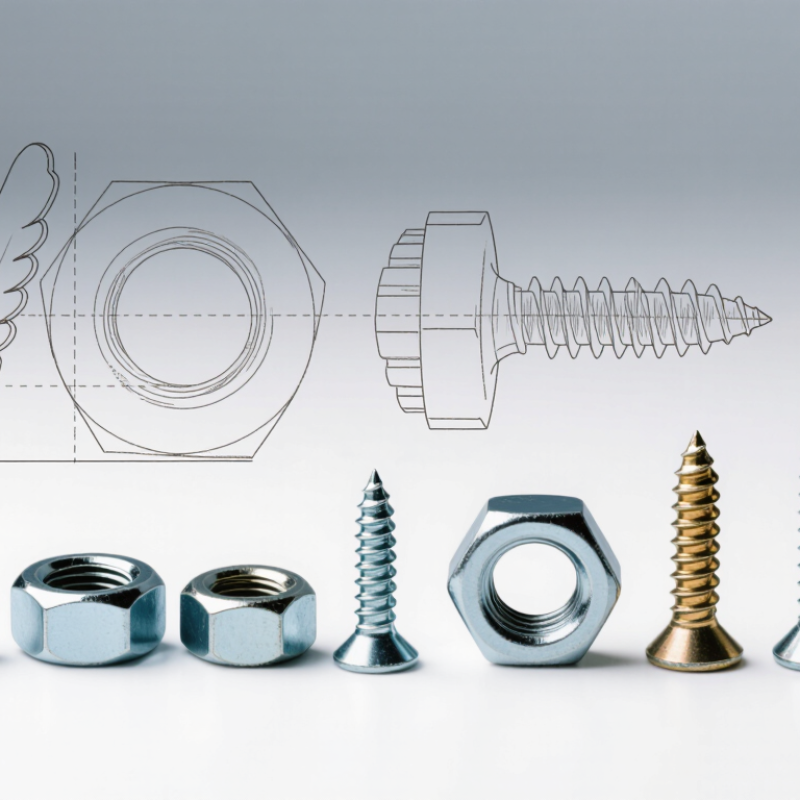
2026 Top Nut With Screw Types for Global Buyers?

What Are Nut-and-Screw Fasteners and How Do They Work?

2026 Top Nut With Screw Types for Global Buyers

Nut-and-screw fasteners join materials through matching threads. The screw passes through aligned holes, while the nut tightens onto its threaded end. Turning the nut creates clamping force between the connected surfaces. This force helps resist separation, slipping, and moderate vibration. Common designs include hex nuts with machine screws, flange nuts with flange-head screws, and lock nuts paired with threaded screws. Choose thread size, pitch, length, and material together. A mismatch may feel tight but still provide weak engagement.

Tips: Check at least two full threads beyond the nut. Use a washer when the surface is soft or oversized. Apply the specified torque, but do not treat torque as perfect proof of clamping force. Surface friction, coatings, and tool accuracy can change the result. In practical inspections, damaged threads often reveal themselves through uneven tightening or metal dust. Replace questionable parts instead of forcing them.

For outdoor or humid applications, corrosion resistance deserves careful attention. Stainless steel, coated steel, and other materials behave differently under load and temperature changes. Locking features can reduce loosening, yet they cannot correct poor alignment. Measure the joint before ordering. It is easy to select a strong screw with an unsuitable nut. That mistake is surprisingly common. Reliable buyers also request material details, dimensional tolerances, test records, and clear packing information from qualified suppliers.

Which Nut-and-Screw Types Are Commonly Used in 2026?

In 2026, common nut-and-screw combinations still depend on the material, load, and installation method. Hex nuts paired with machine screws are widely used in metal brackets, equipment panels, and serviceable assemblies. Flange nuts spread pressure across a wider area, which can help on surfaces that are difficult to access with a separate washer. Nylon-insert lock nuts resist loosening under vibration, but heat and repeated reuse may affect their performance. Fit matters.

Machine screws suit tapped holes or assemblies secured with nuts. Self-tapping screws form threads in suitable materials, while wood screws are designed for timber. Socket-head screws are useful where a compact head and tool access matter; wing nuts allow hand tightening for frequent adjustments. Small parts, real consequences. A common purchasing mistake is matching only the diameter. Buyers should also check thread pitch, length, head style, material, and coating against the drawing and working conditions. Corrosion exposure, vibration, and assembly access can change the right choice. No type is best everywhere, and specifications should be verified before ordering.

2026 Top Nut With Screw Types for Global Buyers? - Which Nut-and-Screw Types Are Commonly Used in 2026?

Common Nut-and-Screw Combination Typical Screw or Bolt Matching Nut Common Applications Typical Materials and Finishes Selection Notes
Hex nut with hex-head bolt Hex-head bolt; examples include ISO 4014 (partially threaded) and ISO 4017 (fully threaded) Standard hex nut; ISO 4032 is a common reference Machinery, structural assemblies, equipment frames, and general-purpose construction Carbon steel with zinc plating or hot-dip galvanizing; stainless steel such as A2 or A4 Choose the bolt length and thread engagement for the joint. Match the nut, bolt, coating, and material requirements.
Hex flange nut with flange-head bolt Flange-head bolt or other compatible externally threaded fastener Hex flange nut; ISO 4161 is a common reference Automotive assemblies, appliances, machinery, and joints where a wider bearing surface is useful Commonly plated carbon steel or stainless steel The flange spreads bearing load over a larger area. A serrated flange can resist loosening, but may mark the mating surface.
Prevailing-torque lock nut with bolt Hex-head bolt, machine screw, or stud with a compatible thread Non-metallic-insert prevailing-torque nut; ISO 7040 is one common reference Equipment and vehicle assemblies subject to vibration or repeated movement Plated carbon steel and stainless-steel versions are available Check temperature limits and reuse requirements. The insert type may lose locking performance after repeated installation.
Wing nut with machine screw or bolt Machine screw or bolt with a matching metric or inch thread Wing nut, designed for hand tightening Adjustable fixtures, access panels, temporary setups, and tool-free adjustments Steel, stainless steel, or plastics, depending on the design Best suited to applications where convenient hand adjustment matters more than high tightening torque.
Cage nut with machine screw Machine screw, often a pan-head or similar cabinet screw Spring-steel cage nut fitted into a square equipment-rack hole Server racks, control cabinets, and sheet-metal enclosures Usually steel cage and nut with a protective plated finish Confirm the rack-hole shape, panel thickness, and thread size. Cage nuts are useful where the panel has no permanent tapped thread.
Rivet nut with machine screw Machine screw with a thread matching the installed insert Blind rivet nut, installed in a prepared hole in sheet material Thin sheet metal, hollow sections, enclosures, and assemblies accessible from one side Steel, stainless steel, or aluminum rivet nuts are commonly available Match the insert to the workpiece material and grip range. Installation requires a suitable rivet-nut tool.
T-nut with machine screw or bolt Machine screw or bolt with a matching thread T-nut with prongs or a flange, selected for the substrate and design Furniture, workholding fixtures, jigs, and components made from wood or other suitable panels Typically steel; stainless options are available for some applications Choose the T-nut style and installation method for the panel material, thickness, and expected pull-out load.
Square nut with carriage bolt Carriage bolt with a square neck beneath its rounded head Square nut Timber joints, outdoor fixtures, and assemblies where the square neck can engage the workpiece Carbon steel with protective coating or stainless steel for corrosion resistance The square neck helps resist rotation when properly seated. Verify that the joint and hole geometry suit the bolt.
Coupling nut with threaded rod Threaded rod or fully threaded stud; this is a rod-and-nut connection rather than a typical screw joint Long hexagonal coupling nut Joining threaded rods, extending a threaded connection, and certain suspension or support assemblies Commonly steel; stainless versions are used where corrosion resistance is needed Confirm thread compatibility and sufficient engagement at both ends. Do not assume the nut alone determines the assembly's load capacity.
Thumb screw with a threaded receiver Thumb screw with a knurled or wing-style head Threaded insert, tapped hole, or matching nut, depending on the assembly Removable covers, access panels, and hand-adjusted equipment parts Steel, stainless steel, or plastic-headed metal screws Often selected for frequent tool-free removal. Check the receiver type and avoid over-tightening by hand.

Buyer note: Standards listed are examples for common metric fasteners; dimensions and requirements vary by standard, size, material, and finish. Confirm thread form, diameter, pitch, strength class, coating compatibility, and applicable local requirements before ordering.

How Do Materials, Coatings, and Standards Differ?

For 2026 global purchasing, nut-with-screw assemblies should be compared by application, not appearance. Carbon steel offers high strength for machinery, while stainless steel performs better in humid or coastal environments. Brass suits electrical and decorative applications, but it is softer under repeated tightening. In field inspections, thread damage often appears before visible corrosion. That detail matters.

Coatings change both service life and assembly behavior. Zinc coatings provide practical protection for indoor and mildly humid conditions. Black oxide gives a clean finish, but it usually needs additional oil or sealing. Nickel improves surface hardness and appearance. Fluoropolymer coatings can reduce friction, although their performance depends on correct curing. Excess coating thickness may cause tight threads. That problem is easy to miss.

Standards also require careful reading. ISO and DIN documents may define thread dimensions, tolerances, and mechanical classes differently. ASTM references often emphasize material testing, coating performance, or fastener strength. Buyers should confirm thread pitch, diameter, hardness, torque range, and corrosion requirements before approval. A certificate alone is not enough. Sampling and gauge inspection remain useful. I have seen visually identical parts fail because their thread systems were not interchangeable. No universal “best” type exists. Even a well-made fastener can be unsuitable when temperature, vibration, or installation tools are ignored.

Nut Selection for Global Buyers: Materials, Coatings & Standards

Reference comparison of representative steel nut property classes. Proof stress is shown in MPa; it is a mechanical property, not a market or sales figure.

How to use this comparison: ISO 898-2 defines mechanical properties for specified steel nuts; the listed values are representative class-level proof-stress values, and applicable requirements depend on nut dimensions and thread range. Stainless steel nuts are covered by ISO 3506-2 and should not be compared directly with these carbon/alloy-steel classes. Coatings affect corrosion protection and dimensions, not the nut’s property class: common coating standards include ISO 4042 for electroplated coatings and ISO 10683 for non-electrolytically applied zinc-flake coatings. Confirm the required material, coating, thread system, and standard edition with the supplier for the application.

How Can Global Buyers Select the Right Fastener?

2026 Top Nut With Screw Types for Global Buyers?

How Can Global Buyers Select the Right Fastener?

Selecting a nut with screw starts with the joint, not the catalog image. Define the load, vibration level, installation space, and service temperature. A hex nut with a machine screw suits general assemblies. A locking nut helps resist vibration, while a captive screw supports panels needing repeated access. The wrong combination may fit today but loosen during transport.

Measure twice. Thread standards matter. Metric and inch threads are not interchangeable, even when their diameters look similar. Confirm pitch, thread direction, tolerance, and screw length from controlled drawings. For outdoor equipment, corrosion-resistant steel or a suitable protective finish may be necessary. In humid or coastal areas, test the complete fastener assembly, not only one component.

Material strength also needs careful review. A soft nut paired with a hardened screw can damage threads during repeated tightening. Check torque limits, clamp load, washer use, and tool access. Practical inspections often reveal overlooked details, such as a screw head touching a moving cover. That mistake is easy to miss. It can also stop production.

Ask suppliers for dimensional reports, material certificates, coating information, and batch traceability. Samples should pass fit, torque, and vibration checks before volume purchasing. Standards improve reliability, but they do not replace application testing. A checklist helps, yet it is never perfect. Recheck assumptions when the fastener enters a new climate, machine, or supply route.

Where Are These Fasteners Used Across Industries?

Across automotive and farm equipment, nuts paired with screws secure brackets, guards, hinges, and service panels. A flange nut can spread clamping force over a wider surface, while a nylon-insert lock nut may help resist loosening under vibration. The right choice depends on the joint, not just the machine. Fit matters.

In electrical cabinets and control panels, compact screw-and-nut assemblies hold rails, covers, and cable supports in place. Stainless steel may suit damp environments, while plated carbon steel is common in dry indoor equipment. Check the material and coating against moisture, heat, and nearby metals. Corrosion can start at the contact point.

Construction machinery and warehouse systems use these fasteners on access panels, guards, and adjustable fixtures. Technicians often need to remove them during inspection, so accessible threads and standard tool sizes can save time. A fastener that looks secure may still be wrong if the screw is too long or the clamping surfaces are uneven. That detail is easy to overlook. Real installations also face dirt, repeated servicing, and rushed repairs, so selection should account for the conditions on site.

FAQS

How do nut-and-screw fasteners work?

The screw passes through aligned holes, and the nut tightens onto its threaded end. Turning the nut creates clamping force between connected surfaces. This force helps resist separation, slipping, and moderate vibration. Fit matters.

Which nut-and-screw combinations are commonly used?

Hex nuts with machine screws suit metal brackets, equipment panels, and serviceable assemblies. Flange nuts spread pressure across a wider surface. Lock nuts help resist loosening during vibration. No type works everywhere.

How should buyers match screw and nut specifications?

Check diameter, thread pitch, length, head style, material, and coating together. A screw may seem strong but still have an unsuitable nut. Matching diameter alone is a common purchasing mistake. Small parts, real consequences.

When should a washer be used?

Use a washer when the surface is soft, oversized, or likely to receive uneven pressure. It can distribute the load across a wider area. A flange nut may provide similar pressure distribution without a separate washer. The surface still needs inspection.

How much thread engagement is recommended?

Keep at least two full threads extending beyond the nut. Insufficient engagement can weaken the joint, even when tightening feels normal. Measure the assembly before ordering parts. Tight does not mean secure.

Can torque confirm correct clamping force?

Not completely. Surface friction, coatings, thread condition, and tool accuracy can change the result. Use the specified torque, but treat it as guidance rather than perfect proof. This is easy to underestimate.

How can damaged threads be identified?

Uneven tightening, resistance, or fine metal dust may indicate damaged threads. Do not force questionable parts into place. Replace damaged fasteners and inspect the mating threads. A careful buyer can still miss subtle damage.

What should be considered for outdoor or humid applications?

Corrosion resistance becomes important in humid or outdoor conditions. Stainless steel, coated steel, and other materials respond differently to load and temperature changes. Check material details, dimensional tolerances, test records, and packing information. The specification may still need review.

Conclusion

Nut With Screw fasteners combine a threaded screw or bolt with a matching nut to create a secure, adjustable connection between components. In 2026, global buyers may choose from hex nuts with screws, flange combinations, lock nuts, wing nuts, cap nuts, and other specialized configurations, depending on installation needs, load requirements, and available space. Each type offers different advantages in strength, vibration resistance, maintenance, and assembly speed.

Material and surface selection are equally important. Carbon steel, stainless steel, alloy steel, brass, and other materials provide different levels of strength, corrosion resistance, weight, and cost. Coatings can further improve durability, while recognized dimensional, mechanical, and quality standards support reliable interchangeability across markets. Buyers should evaluate thread compatibility, operating environment, load, temperature, corrosion exposure, certification needs, packaging, and supply consistency before purchasing. These fasteners are widely used in construction, machinery, automotive equipment, renewable energy systems, furniture, electronics, and industrial maintenance.


Mason

Mason

Mason is a seasoned marketing professional with a deep expertise in the company's offerings and a passion for driving brand awareness. With a strong background in digital marketing strategies, he has an innate ability to connect with diverse audiences and effectively communicate product benefits.......