Global buyers need more than a low quote when choosing a Bolt On Screw manufacturer. They need consistent dimensions, dependable materials, and clear quality records. A screw that fits one assembly may fail in another if thread pitch, head design, coating, or load requirements differ. Small details matter.
For this introduction, fictional fastening engineer Daniel Mercer offers a practical reminder: “A reliable screw is proven in the application, not just on the drawing.” The quotation is illustrative, not a verified statement from a real industry authority. That distinction matters in a sourcing guide. Buyers should compare manufacturers using documented specifications, sample evaluation, inspection practices, and communication about production changes. Ask how suppliers control thread accuracy and surface finish. Request relevant test reports and traceability details. Then check whether the factory can maintain those standards across repeat orders.
This guide to the 2026 Best Bolt On Screw Manufacturers for Global Buyers examines product range, manufacturing capability, quality assurance, customization, and export support. It also considers how suppliers handle practical requests, such as matching a screw to a specific panel thickness or installation method. Price matters. But the cheapest offer can become costly when dimensions vary or delivery dates slip. No supplier is perfect, and a polished catalog cannot replace verification. Use the comparisons as a starting point, then confirm critical requirements directly with each manufacturer.
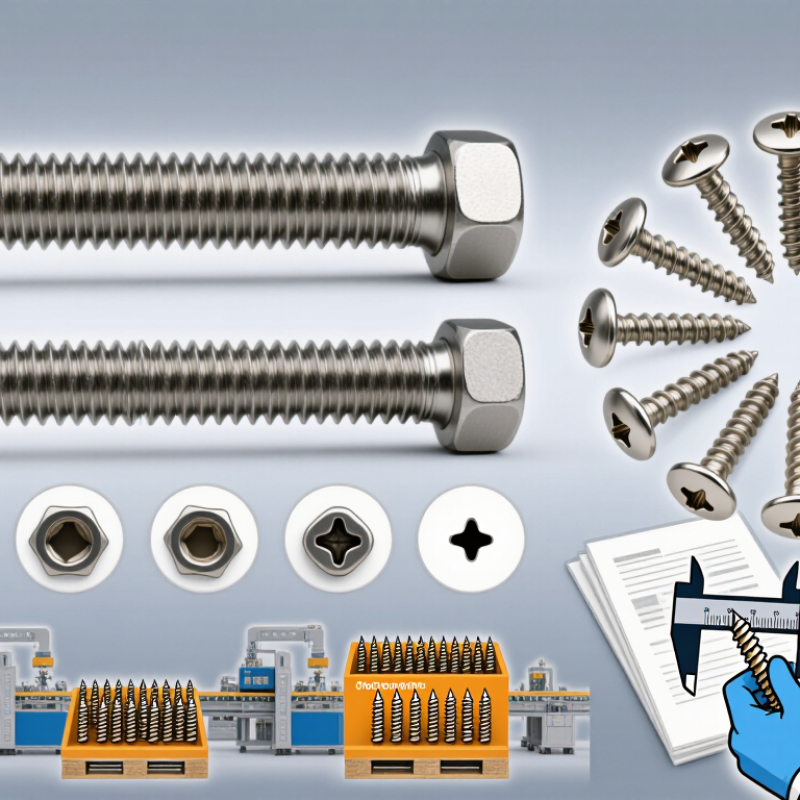
Bolt-on screws are mechanical fasteners installed through a prepared hole, usually with a nut or threaded receiving part. Unlike ordinary wood screws, they create a strong, serviceable joint between metal, panels, brackets, or machine frames. Common types include hex-head screws, socket-head screws, countersunk screws, and flange-head designs. Each type serves a different access, clearance, and load requirement.
Material choice matters. Carbon steel suits general structural fastening, while stainless steel performs better in humid or corrosive environments. Surface treatments, such as zinc plating, can improve rust resistance, but coating thickness may affect thread fit. Check the thread standard, diameter, length, head clearance, and required tightening torque before purchasing. Fit matters. A small mismatch can cause vibration, damaged threads, or difficult maintenance.
Many bolt-on screws fall under HS Code 7318, covering screws, bolts, nuts, washers, and similar iron or steel articles. However, the exact tariff subheading may depend on product design, material, finish, and national customs rules. Buyers should provide technical drawings, material certificates, and packing details to their customs broker. Do not rely on the broad code alone. Classification errors remain possible, especially for unusual assemblies or mixed-material products. I have found that a clear specification sheet prevents more delays than a low quoted price.
Material quality separates dependable bolt-on screws from attractive but risky substitutes. ISO 898-1 defines mechanical requirements for carbon and alloy steel fasteners. Classes 8.8, 10.9, and 12.9 indicate increasing tensile strength and load capacity. Their minimum nominal tensile strengths are about 800, 1,000, and 1,200 MPa. These figures are useful, but they are not the whole purchasing decision.
Experienced buyers should check diameter-specific proof loads, hardness, heat-treatment records, and batch traceability. A class 12.9 screw is not automatically better for every joint. Excessive hardness can reduce toughness in demanding assemblies. Correct preload, tightening equipment, thread engagement, and joint design still matter. In practical inspections, markings must match the certificate and packing label. Small inconsistencies deserve attention. They may reveal a wider quality problem.
Tips: Request an ISO 898-1 test report for every production lot. Confirm whether testing covers the ordered diameter and finish. Avoid accepting generic “high-strength” claims without measured results. During incoming inspection, use calibrated tools and retain sample records. A torque value alone cannot prove preload accuracy. Even experienced teams sometimes overestimate this relationship. Review failures honestly, including installation mistakes, because supplier selection is only one part of fastener reliability.
When sourcing bolt on screws in 2026, certification checks should begin with the manufacturing site, not a sales brochure. ISO 9001 shows that a supplier operates a documented quality system. Check the certificate number, issuing body, site address, and expiration date. The certified scope should include fastener production, inspection, or related processes.
For automotive applications, IATF 16949 provides deeper evidence of process control. Ask how the factory manages special characteristics, calibration, traceability, and corrective actions. During a supplier audit, review real inspection records. Look for thread gauges, torque results, coating thickness readings, and lot identification. Small details matter. A missing gauge record can weaken confidence in an otherwise polished system.
PPAP records reveal whether the supplier can repeat approved production conditions. Request the control plan, process flow, dimensional report, material certificates, capability studies, MSA results, and approved samples. These documents should match the actual part number and drawing revision. Redacted records are acceptable, but unexplained gaps deserve questions. I have seen attractive PPAP files with old revision numbers. That mistake is easy to miss. It should not be ignored.
Compare sample measurements with the drawing tolerances, then confirm how nonconforming screws are isolated. A capable manufacturer can explain the decision trail clearly, even when a process has failed. Reliability is not perfection. It is visible control, honest records, and timely improvement.
Global buyers should compare MOQ, lead time, tolerance, and cost per 1,000 units using the same drawing, material, finish, and packaging. A 500-piece MOQ and a 5,000-piece MOQ are not comparable unless the price breaks are clear. Ask for quotes at several quantities. Small detail, big impact. Separate factory lead time from transit time, and confirm whether inspection delays are included. The World Bank’s 2023 Logistics Performance Index reports a 44-day median journey for containerized shipments from exporter warehouse to importer warehouse. That figure is not screw-specific, but it shows why ocean freight can outlast production.
For dimensional checks, ISO 4759-1 defines tolerance classes for fasteners; specify the required class and critical dimensions on the drawing. Ask suppliers to report measured results, not simply state “within tolerance.” For strength, ISO 898-1 covers mechanical properties of carbon and alloy steel fasteners. Request the material grade and supporting test documentation. Price per 1,000 should include coating, sorting, packaging, and delivery terms, so the landed cost is visible. A low unit price can mislead. I would still verify sample consistency before committing to a large order; a polished quotation is not proof of repeatable production.
Global Buyer Metrics: MOQ, Lead Time, Tolerance, and Cost per 1,000 Units
Illustrative planning range · pieces
Illustrative planning range · days
Example range · mm
Illustrative planning range · USD
These ranges are illustrative planning assumptions, not verified 2026 market averages or supplier quotations. Actual MOQ, lead time, tolerances, and unit cost depend on screw specifications, material, finish, order volume, inspection requirements, and shipping terms. Confirm all figures with current RFQs and applicable product standards.
For global buyers sourcing bolt-on screws in 2026, compliance should be checked before price negotiations. A reliable manufacturer should provide current REACH declarations and RoHS evidence for relevant materials, coatings, and packaging. Ask for the substance assessment date. Regulations change, and old declarations may no longer support a new shipment.
ASTM F606/F606M test records should identify the fastener grade, dimensions, lot number, test method, and measured results. Confirm whether tensile strength, proof load, hardness, and wedge testing match your purchase specification. Paperwork is evidence. Traceability connects that evidence to the box on your receiving dock. Export documents should include a commercial invoice, packing list, accurate HS classification, certificate of origin, transport document, and material or inspection certificates when required. Coated products may also need chemical safety information. Details matter.
In practice, I compare the certificate lot with the marking on cartons and inner bags. Mismatches are uncommon, but they happen. A polished PDF cannot replace controlled production records. Buyers should also confirm packaging labels, country-of-origin rules, destination customs requirements, and document language before dispatch. Some suppliers answer quickly but provide incomplete test scopes. That gap deserves questions, not assumptions. A written checklist, signed by both parties, reduces costly surprises without pretending that compliance is automatic.
Request prices at several quantities, such as 500 and 5,000 pieces. Keep the drawing, material, finish, and packaging identical. Small detail, big impact.
Separate production time from transit time. Confirm whether inspection delays are included. Container shipments can take weeks; one reported median journey was 44 days.
State the required tolerance class and critical dimensions on the drawing. Request measured inspection results, not just a statement that parts are within tolerance.
Include coating, sorting, packaging, and delivery terms. A low unit price can mislead. Compare the estimated landed cost instead.
Ask for the material grade and test records linked to the fastener lot. Records should show relevant measurements, such as tensile strength, proof load, and hardness.
Request current declarations and evidence covering relevant materials, coatings, and packaging. Check the assessment date; older documents may not support a new shipment.
Look for the grade, dimensions, lot number, test method, and measured results. Confirm that the tests match your purchase specification. Paperwork is evidence.
Compare certificate lot numbers with markings on cartons and inner bags. Check invoices, packing lists, origin details, and transport documents before dispatch. Mismatches happen.
No. Check sample consistency and controlled production records first. I would still want clearer evidence before committing; a good-looking PDF can leave gaps.
This guide helps global buyers evaluate Bolt On Screw manufacturers in 2026 by covering product definitions, common types, applications, and HS Code 7318 classification. It explains how ISO 898-1 strength classes 8.8, 10.9, and 12.9 relate to mechanical performance, load requirements, material selection, and dependable use in industrial equipment, vehicles, machinery, and structural assemblies.
It also outlines practical manufacturer quality checks, including ISO 9001 systems, IATF 16949 processes, and PPAP records where applicable. Buyers can compare suppliers using MOQ, lead time, dimensional tolerance, and cost per 1,000 units, while confirming compliance with REACH, RoHS, and ASTM F606/F606M requirements. A complete evaluation should also review inspection reports, traceability, packaging details, certificates, commercial invoices, packing lists, and other export documents to support consistent quality and smooth international purchasing.

Dongshuo Fastener